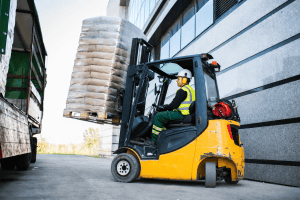
 OSHA regularly cites employers for forklift-related violations, many of which stem from preventable issues such as inadequate training, poor maintenance, or unsafe operating practices.
The good news is that warning signs are often present long before an injury, equipment damage, or OSHA inspection occurs. Recognizing those signs early can help keep workers safe and your workplace compliant.
What’s OSHA’s Definition of Forklift Safety?
OSHA refers to forklifts as powered industrial trucks and regulates their use under 29 CFR 1910.178.
Under this standard, employers are responsible for ensuring that:
- Operators receive proper training and evaluation.
- Forklifts are inspected regularly.
- Equipment is maintained in safe operating condition.
- Trucks are used only for their intended purposes.
- Operators follow safe operating procedures.
- Workplace hazards are identified and addressed.
OSHA requires operators to demonstrate the knowledge and skills needed to safely operate the specific type of powered industrial truck they use. Training must include both formal instruction and hands-on evaluation.
Forklift safety is not a one-time event. It requires ongoing attention from both employers and workers.
What You Stand to Lose When Forklift Violations Happen
When safety procedures break down, the consequences can be severe.
For workers, forklift incidents can result in:
- Serious injuries
- Crush incidents
- Falls
- Struck-by accidents
- Fatalities
For employers, violations can lead to:
- OSHA citations and penalties
- Workers’ compensation claims
- Damaged equipment and products
- Operational downtime
- Increased insurance costs
- Reduced employee morale
Many forklift incidents are not caused by equipment failure. They result from unsafe behaviors, missing procedures, or overlooked hazards that gradually become accepted as normal.
8 Signs You’re at Risk of a Forklift Safety Violation
If any of the following situations sound familiar, your workplace may be at increased risk.
- Operators Have Not Been Properly Trained: OSHA requires forklift operators to receive formal instruction, practical training, and performance evaluations.
- Evaluations Are Outdated or Missing: OSHA requires operators to be evaluated at least once every three years and whenever unsafe operation, workplace changes, or equipment changes create a need for additional training. If records are missing or evaluations have not been completed, it’s time to take a closer look.
- Daily Inspections Are Being Skipped: Forklifts should be inspected before each shift. Operators should check items such as: tires, brakes, steering, forks, hydraulic systems, warning devices, and fluid levels. When inspections become a checkbox exercise or stop happening altogether, hazards often go unnoticed.
- Operators Are Speeding or Taking Shortcuts: Speeding, sharp turns, sudden stops, and carrying loads too high off the ground are common warning signs of a weak safety culture.
- Pedestrian Traffic and Forklift Traffic Mix Together: One of the biggest forklift hazards occurs when people and equipment share the same space without clear controls. If employees frequently walk through forklift travel paths or operators struggle to see pedestrians, your workplace should reevaluate traffic flow and controls.
- Loads Block the Operator’s View: Operators should maintain clear visibility while traveling. When loads obstruct vision, operators may need to travel in reverse or use a spotter.
- Forklifts Show Signs of Damage: Damaged forks, leaking hydraulics, worn tires, malfunctioning lights, or broken warning devices should never be ignored.
- Safety Rules Exist Only on Paper: Written procedures are important, but they’re not enough. If supervisors tolerate unsafe behavior, inspections are rushed, or operators routinely ignore established procedures, your organization is relying on luck rather than a safety program. Strong forklift safety is visible in everyday behaviors, not just written policies.
The Bottom Line
Forklift violations rarely happen without warning. The signs are often present long before an injury, equipment damage, or OSHA inspection reveals them.
By recognizing unsafe habits, maintaining equipment, providing proper training, and reinforcing safe operating practices, employers and workers can reduce risk and create safer workplaces.
For organizations looking to strengthen their forklift safety programs, ACNSC’s Lift Truck Operator Train the Trainer program provides the knowledge and tools needed to train operators and support OSHA compliance. Learn more and register for a class here.